
3D Virtual Tours: 7 Practical Uses for Real Estate, Retail and Businesses
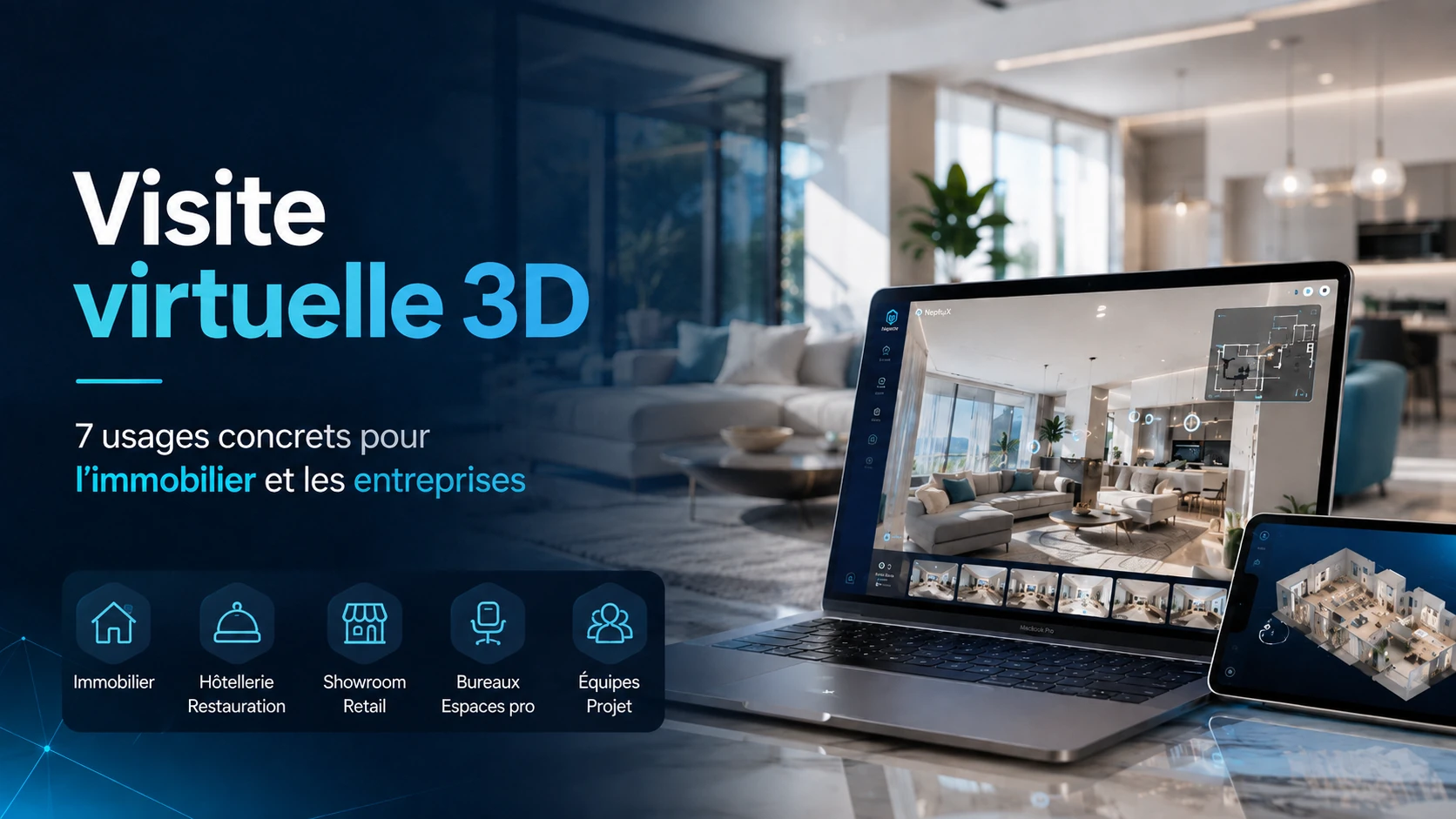
A 3D virtual tour is often associated with showcasing a property. Yet today, its value goes far beyond simply viewing an apartment or a house.
A digitised space can be used to showcase, sell, rent, document, prepare a project or allow several people to view a place remotely.
Real estate, retail, offices, hospitality, technical projects or communication: here are seven practical uses for a 3D virtual tour and the situations in which it can genuinely add value.
What exactly can a 3D virtual tour be used for?
A virtual tour allows a user to explore a space from a computer, tablet or smartphone.
Unlike a series of photographs, the user does not simply look at images selected for them: they can move through the environment and explore different areas according to their own needs.
With a technology such as Matterport, it is also possible to obtain an overall representation of the building and better understand how the different rooms are organised.
This ability to explore a space remotely is why a 3D virtual tour can serve so many different purposes.
Explore a space as if you were there
Click inside the tour and move around freely to immediately understand the difference between a series of photos and a truly navigable space.
1. Let people tour a property remotely
This is probably the best-known use of a 3D virtual tour.
A house, apartment or building can be explored remotely before arranging an in-person viewing.
The user can understand, in particular:
- the layout of the rooms;
- the relationship between different spaces;
- circulation routes;
- the volumes;
- the overall atmosphere of the property.
A virtual tour does not necessarily replace an in-person visit. Above all, it allows a prospective buyer or tenant to explore the property in greater detail before deciding whether to travel there.
2. Showcase a shop or showroom
For a retail business, the space itself is often part of the customer experience.
A virtual tour can be used to present the atmosphere of the shop, its layout and its main areas before the customer even visits.
In a showroom, the value can be even greater when a business wants to present several spaces, product ranges or environments to prospects who cannot immediately visit in person.
For some establishments, a presence on Google Street View can also complement this approach by allowing people to discover the premises directly within Google’s ecosystem.
3. Present a hotel, restaurant or hospitality venue
When a customer books a hotel, restaurant or event venue, they often want to understand what the place really feels like.
Photographs are effective for showing specific details or viewpoints. An immersive tour can complement them by revealing the relationship between different spaces.
Depending on the project, it may be useful to present:
- a reception area;
- a dining room;
- a bedroom;
- shared areas;
- a meeting or event room;
- important circulation areas.
4. Present offices or professional spaces
A 3D virtual tour can also be used to present a workplace to employees, partners or candidates.
In larger premises, a navigable representation makes it easier to understand the different areas: offices, meeting rooms, shared spaces, reception areas and circulation routes.
It can also be used when someone needs to discover the premises without being able to visit immediately.
5. Keep a visual record of a building
A virtual tour is not only a customer-facing communication tool.
It can also provide a visual record of a building at a specific point in time.
For a business or project team, this can make it possible to review the general configuration of the site later without having to return there every time.
This representation can be particularly useful for:
- reviewing the configuration of a space;
- preparing an intervention;
- discussing the site with a contractor;
- sharing an existing situation with several stakeholders;
- keeping a visual reference before a transformation.
6. Make collaboration easier for project teams
Architects, project managers, facility managers, contractors or decision-makers may need to consult the same space regularly.
When everyone cannot be on site at the same time, a 3D tour provides a shared visual reference for discussions.
A stakeholder can, for example, point out a specific area during a video call, check a circulation route or present the environment to someone working remotely.
The tour does not replace technical plans, surveys or studies required for the project. Its main value is to provide a shared visual representation of the existing environment.
7. Let people explore a project that does not exist yet
All of the previous uses mainly concern existing spaces.
However, a virtual tour can also be created when the building does not yet physically exist.
Using a 2D floor plan and the available project information, the space can be reconstructed in 3D, furnished and then transformed into an immersive environment.
This approach can be particularly useful for:
- a property development;
- a future office fit-out;
- a shop before renovation work;
- a major renovation;
- a future showroom;
- a presentation to a client or investor.
The project then moves from a 2D floor plan to a representation that makes the volumes much easier to understand before work even begins.
Existing space or future project: the technology is not the same
There are two different situations to distinguish.
Digitise what already exists
A technology such as Matterport can capture a real space and transform it into a navigable virtual environment.
Build virtually what does not yet exist
Starting from a 2D floor plan, the project can be modelled in 3D before the immersive experience is created.
The result may look similar to the visitor, but the creation process is therefore very different.
How can you tell whether a virtual tour is useful for your project?
A virtual tour becomes particularly relevant when at least one of the following situations applies to your project.
Some people cannot travel to the site
Customers, employees or contractors need to be able to view the premises remotely.
Understanding the space is important
Volumes, circulation routes or the relationship between several rooms influence the decision.
The site needs to be consulted several times
A remotely accessible representation can avoid some repeat visits when a physical presence is not necessary.
The project is difficult to visualise
When a plan or a few photographs are not enough to understand a space, immersion can provide a more concrete view.
What a 3D virtual tour does not replace
A virtual tour is a presentation and understanding tool.
Depending on the project, it does not replace:
- an in-person visit when one is necessary;
- architectural plans;
- a certified technical survey;
- a regulatory study;
- professional communication photography;
- the design work of an architect or engineering consultancy.
Instead, it complements these tools by providing spatial understanding that traditional documents do not always provide as quickly.
FAQ about the uses of a 3D virtual tour
Are virtual tours only used for real estate?
No. Real estate is a common use, but virtual tours can also be used for shops, offices, hotels, professional premises, technical buildings or future projects.
Can a business use a 3D virtual tour internally?
Yes. A tour can, for example, be used to share the configuration of a building with employees, contractors or project teams working remotely.
Can a virtual tour be created before a building is constructed?
Yes. When the project does not yet exist, a 3D environment can be created from the available plans and project information, then transformed into an immersive experience.
What is the difference between a Matterport tour and a 3D tour from floor plans?
Matterport is used to digitise a space that physically exists. For a future project, the environment first has to be modelled from the plans before it can be explored.
Can a virtual tour be embedded on a website?
Yes. Depending on the technology used, an immersive experience can be embedded directly into a web page so visitors can explore the space without leaving the site.
Which type of virtual tour should I choose for my project?
The choice mainly depends on whether the space already exists, the level of understanding required, who the tour is intended for and where it will be used.
How would you like to use your virtual tour?
Existing space, future project, commercial presentation or team requirement: tell us what you want to achieve and we can identify the right 3D solution.